- HOME
- PEMF Pad for Dogs
PEMF Therapy for Dogs & Cats: Can the HealthyLine TAJ Mat Help Your Pet?

Your dog or cat is family, and seeing them struggle with arthritis pain or stiffness is tough. While veterinary PEMF is an option, at-home therapy can offer daily support.
This isn't a review of a pet-specific product. Instead, we explore how pet owners are adapting HealthyLine's human-grade TAJ PEMF mats for their furry family members. We'll examine the TAJ 2020 (20"×20") for cats and small dogs, the TAJ 3220 (32"×20") for medium to large breeds, plus larger options available directly from HealthyLine.
Important Note: A human-grade mat must be protected with a waterproof, chew-resistant cover (sold separately) for safe pet use.
As a bonus, ordering through our link provides a 10% discount on HealthyLine's site, making this quality option more accessible.
🐾 Here's a quick rundown of the blog post
Why Consider PEMF for Pets?
When your dog's arthritis makes every step painful or your cat's anxiety turns them into a shadow of themselves, you'll explore every option. PEMF therapy offers what many pet medications can't [1]. A daily, non-invasive support without pharmaceutical side effects [2].
While veterinary PEMF exists (often at $150-$300 per session), the ability to provide consistent therapy at home is what makes mat-based systems compelling. Think of it like physical therapy. Occasional clinic visits help, but daily home exercises create lasting change.
For pets battling inflammation, joint stiffness, or nervous system imbalances, a PEMF mat could be that daily support system [3,4,5]. Want to dive deeper into the science? We've written extensively about PEMF for dogs and managing canine arthritis.
Meet the TAJ series
Affordable, Human-Grade Technology for Your Pet
The HealthyLine TAJ Mat series is built on a foundation of five combined wellness therapies designed for human use. For pet owners considering this technology, understanding its core components is the first step in evaluating its potential adaptation.
The Multi-Therapy Foundation
Each TAJ mat has 21-layers. The mat delivers five therapies.
🐾 PEMF Therapy uses a gentle sine wave at a default frequency of 7.83 Hz (the Earth's natural resonance) and an intensity of 2 Gauss. It's FDA-cleared for conditions like osteoarthritis and post-operative pain in humans.
🐾 Far Infrared Heat provides deep, penetrating warmth that is adjustable between 86-158°F (30-70°C).
🐾 Photon Light Therapy uses targeted red light wavelengths.
🐾 Negative Ion Therapy aims to purify the immediate environment [6].
🐾 Gemstone Heat Therapy utilizes layers of tourmaline, amethyst, and jade, which are heated to release their properties.
Which TAJ mat for your pet?
Two Practical Sizes for Pets
For adapting this technology for a dog or cat, the smaller TAJ models are the most practical and affordable starting points. Here are the key specifications for the two sizes you are featuring:
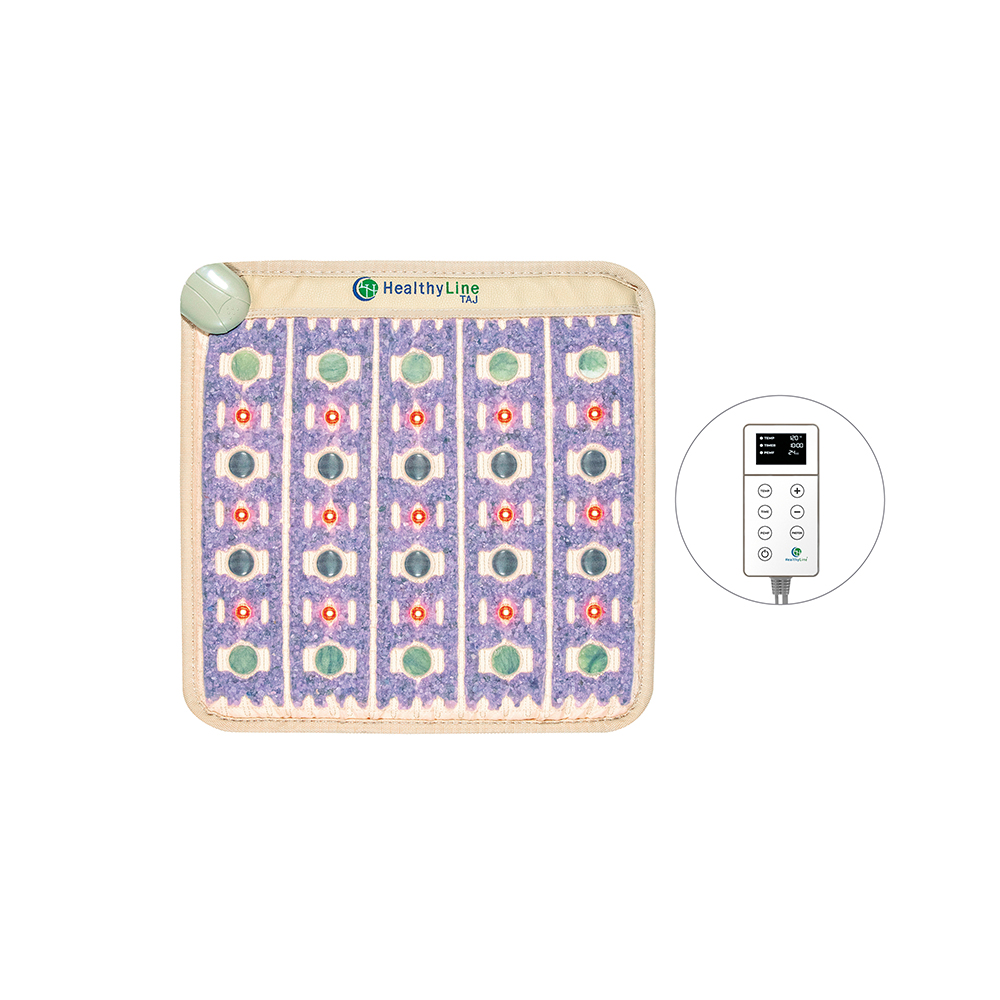
Taj Mat 2020 for Pets Small
Size: 51 x 51 inch | 20 x 20 cm
Weight: 5.9lbs | 2.7 kg
Cats, very small dogs, or targeted spot treatment (e.g., a sore hip).
$349 at HealthyLine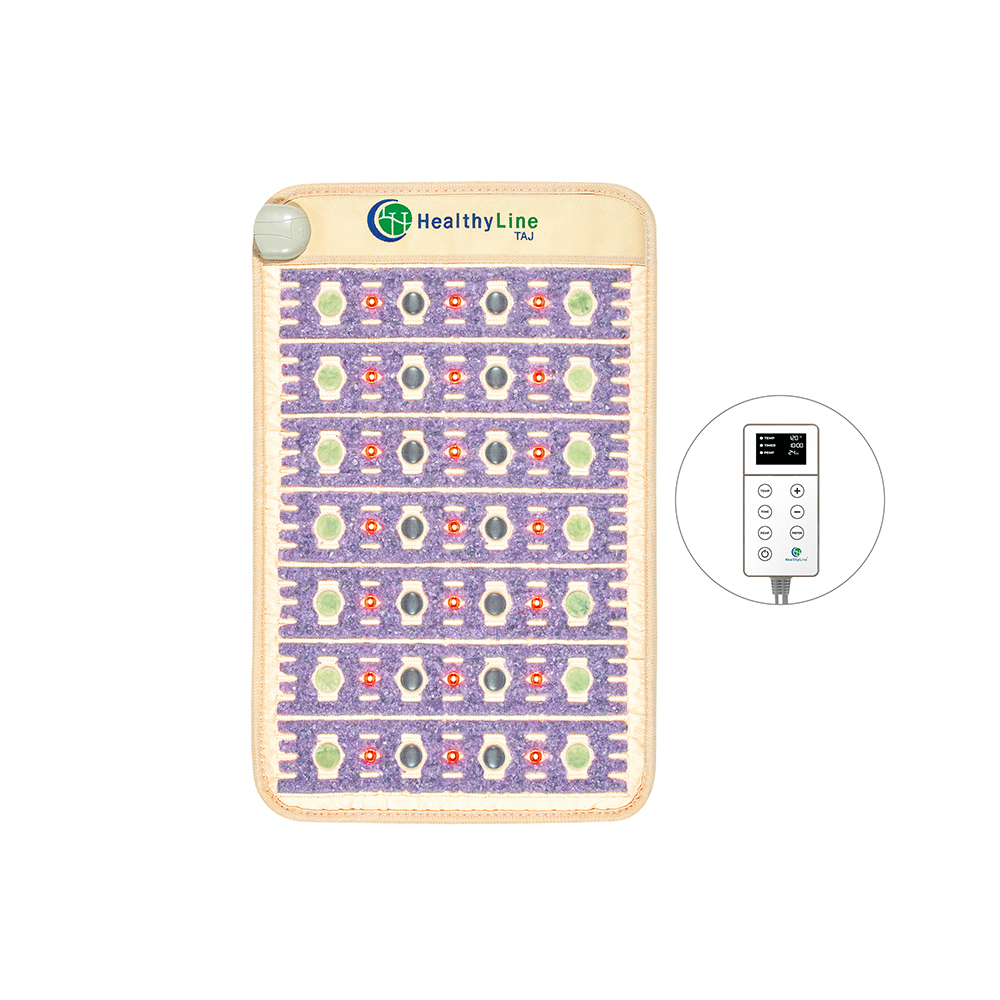
Taj Mat 3220 for Pets Large
Size: 32 x 20 inch | 81 x 51 cm
Weight: 8lbs | 3.6 kg
Small to medium-sized dogs, or for a cat to stretch out fully.
$499 at HealthyLineUse code saunace10 for 10% discount + free shipping PEMF mat offer.
Important Notes on Use & Suitability
🐾 If the TAJ 3220 is too small for a larger breed, HealthyLine does offer bigger mats like the 60"x24" model.
🐾 The mats have a firm, non-bendable structure to house the PEMF coils. They fold at specific points but cannot be rolled, which is a consideration for storage.
🐾 The adjustable, low-level infrared heat (starting at 86°F) and the gentle, low-Gauss PEMF are the most relevant features for potential pet anxiety and comfort. The multi-therapy approach may offer broader soothing effects.
Is your dog struggling with arthritis? 👉 How Can You Help Your Dog With Arthritis? Essential Tips And Advice for practical ways to ease their pain and improve mobility
Gauss explained for pets
Finding the Right "Volume" for Your Dog or Cat
When adapting human PEMF technology for pets, understanding intensity measured in Gauss (G) or microTesla (μT) is crucial. For our pets, it's not about finding the "strongest" signal, but the most appropriate one for their size, condition, and comfort.
Veterinary Guidelines on PEMF Intensity
In veterinary PEMF therapy, intensity determines how deeply the therapeutic field penetrates tissue. Based on expert guidelines, devices are chosen for specific purposes:
🐾 Low Intensity (Below 1 Gauss / 100 μT): Effective for surface-level conditions, wound healing, or providing a calming effect on the central nervous system to reduce anxiety. Think of this as a gentle whisper to your pet's cells.
🐾 Moderate Intensity (2-30 Gauss / 200-3,000 μT): This range is most common for triggering tissue repair, managing inflammation in deeper joints, and promoting healing in conditions like arthritis. This is akin to a clear, direct conversation with the body's deeper tissues.
For context, the Earth's natural magnetic field, which all life has evolved with, has an intensity of about 0.25-0.65 Gauss. Many therapeutic devices, including the HealthyLine TAJ mat, operate at intensities designed to work in harmony with this natural baseline.
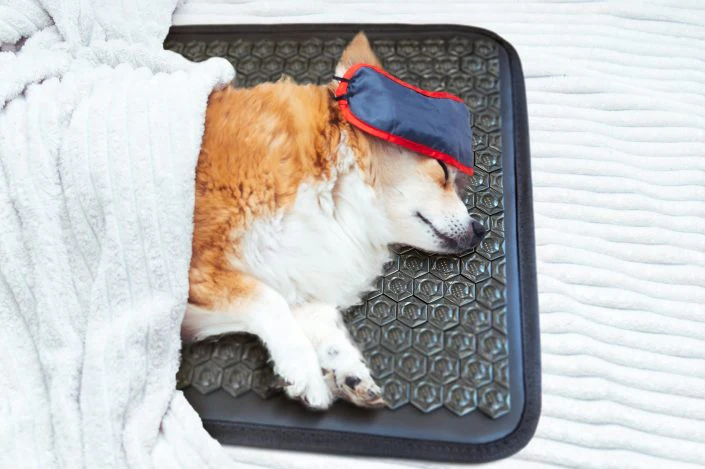
The TAJ Mat's Intensity in a Pet Context
The HealthyLine TAJ mat operates at 2 Gauss (200 μT). According to the veterinary framework above, this places it firmly in the moderate, therapeutic range suitable for addressing deeper tissue concerns like joint stiffness and inflammation associated with arthritis.
This intensity is:
🐾 Stronger than calming devices, making it a candidate for physical relief, not just relaxation.
🐾 Substantially lower than some high-intensity pet-specific devices (which can advertise 25 Gauss or more), but still within the clinically referenced effective range for many conditions.
🐾 Supported by evidence: A 2025 clinical study on dogs with osteoarthritis found significant improvement in gait symmetry using a PEMF mat with an intensity of 60-150 μT [7]. A range even lower than the TAJ's output.
Why Lower Gauss Can Still Be Very Effective
Higher Gauss is not universally "better." Intensity must be matched to the goal.
🐾 For chronic, full-body support like managing daily arthritis discomfort or general anxiety, a gentle, sustained signal (like the TAJ's 2G) is often ideal. It's designed for longer, cumulative sessions that support cellular function without overstimulation.
🐾 Very high intensities are typically reserved for short-duration, targeted treatments of acute injuries or specific deep-tissue protocols under professional guidance.
Intensity is Just One Part of the Picture
Effectiveness depends on the synergy of all parameters and therapies:
🐾 Frequency: The TAJ's default is 7.83 Hz (the Schumann Resonance, or Earth's frequency), which is within the 5-60 Hz range considered ideal for pets and is known for its grounding, calming effects.
🐾 Combined Therapies: The TAJ's far-infrared heat works synergistically with PEMF by increasing circulation, which can help deliver the benefits of the electromagnetic field more effectively to stiff joints and muscles.
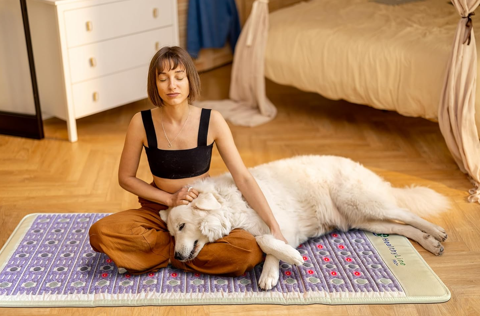
Critical Safety Considerations for Pets
Before using any PEMF device on your pet, consult your veterinarian. Some key contraindications include:
🐾 Pacemakers (in pet or owner).
🐾 Pregnancy.
🐾 Active bleeding or hemorrhage.
🐾 Untreated fungal infections.
🐾 Cancer (unless explicitly approved by your vet).
Choosing Intensity for Your Pet
The following table outlines how to think about intensity for common pet scenarios:
| Target Goal | Recommended Intensity Range | Ideal For | TAJ Mat (2G) Fit? |
|---|---|---|---|
| Calming & Anxiety Relief | Low (Under 1 Gauss) | Thunderstorm phobia, general nervousness | Possible, using low heat and short sessions |
| Joint Stiffness & Arthritis | Moderate (2–30 Gauss) | Daily support for osteoarthritis, hip dysplasia | Yes, this is its primary therapeutic range |
| Post-Surgery or Injury Recovery | Moderate to High | Supporting healing after soft-tissue injury or surgery | May help, but always follow your vet’s primary protocol |
| Deep Bone Healing | Higher Ranges | Non-union fractures | Not typically; requires targeted veterinary devices |
Ultimately, the TAJ mat's 2 Gauss intensity represents a gentle yet therapeutically relevant level for at-home management of chronic conditions like arthritis and anxiety in pets. Its true value comes from the combination of this PEMF signal with far-infrared heat, applied consistently and safely under a protective cover and veterinary guidance.
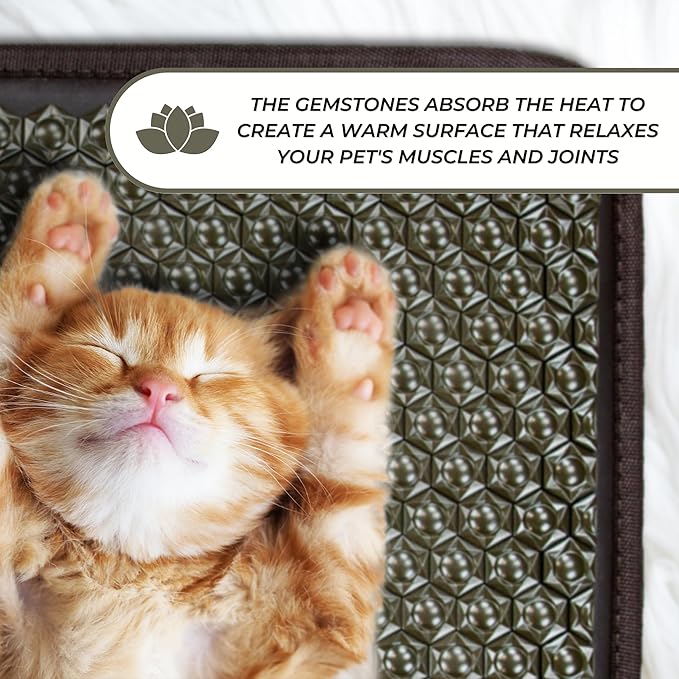
Essential safety & protection measures
Adapting a human-grade PEMF mat for a dog or cat requires more than just turning it on. It demands a proactive, safety-first approach to address the specific risks pets pose to the mat and, more importantly, the mat poses to your pet. Here are the non-negotiable measures for creating a secure and therapeutic experience.
Physical Protection
Shielding the Mat from Your Pet
The TAJ mat's fabric and internal components are not designed to withstand pets. A protective barrier is your most critical investment.
🐾 Waterproof Cover (Mandatory): Essential for accidents, drool, and sweat. Look for covers with a TPU or PVC backing and a soft, machine-washable top layer (like fleece or microfiber) for comfort.
🐾 Chew-Resistant Layer (Strongly Recommended): For curious chewers or anxious pets that might gnaw, consider a hard-sided protective mat or tray placed underneath the cover, or a specially designed chew-proof pet blanket as an intermediate layer.
🐾 Non-Slip Base: To prevent the mat and cover from sliding during use, place the entire setup on a non-slip yoga mat or rug gripper. This provides stability and confidence for your pet.
🐾 Claw Management: Keep your pet's nails trimmed to minimize the risk of puncturing the protective cover and damaging the mat's surface.
Operational Safety
Adjusting Settings for Animal Use
Never use human-preset programs for pets. Their smaller size and different metabolisms require a conservative approach.
🐾 Start Low & Go Slow: Always begin with the lowest heat setting (86°F/30°C) and shortest session time (5-10 minutes). Observe your pet's reaction over several days before considering gradual increases.
🐾 Supervision is Non-Negotiable: Never leave your pet unattended on the mat, especially during initial sessions. You must be present to monitor their comfort and intervene immediately if needed.
🐾 Provide an Escape Route: Never trap your pet on the mat. Ensure they can easily walk away at any sign of discomfort. Forcing a session will create negative associations.
🐾 Know the Contraindications: Do not use the mat on a pet with a pacemaker, internal electrical implants, or who is pregnant. Consult your vet if your pet has cancer, an acute infection, or a bleeding disorder.

Essential Safety Gear Checklist
Before your pet's first session, ensure you have this gear.
| Item | Purpose | Recommendation |
|---|---|---|
| Waterproof Cover | Protects the mat from moisture, hair, and odors | TPU-backed and machine-washable |
| Chew-Resistant Mat or Blanket | Adds an extra layer of protection against claws and teeth | Place between the mat and the soft cover |
| Non-Slip Base | Prevents slipping and sliding for pet safety | Yoga mat or rug gripper |
| Pet Bed or Familiar Blanket | Increases comfort and positive association | Place on top of the protected mat |
Veterinary Guidance
The Most Important Step Before you begin
- Consult Your Veterinarian: Discuss your plan to use PEMF therapy, your pet's specific condition (e.g., arthritis grade), and get their approval.
- Establish a Baseline: Have a clear understanding of your pet's current mobility or anxiety level so you can objectively track any changes.
- Report Any Concerns: If you notice unusual behavior, lethargy, or increased pain after sessions, stop use and contact your vet immediately.
Reading Your Pet's Signals
Your pet will tell you if the session is helpful or distressing.
🐾 Signs of Comfort/Acceptance: Relaxed posture, sighing, lying down voluntarily, muscles softening, falling asleep.
🐾 Signs of Discomfort/Stress: Panting, pacing, whining, trying to leave, trembling, staring fixedly, or appearing "shut down." If you see these, end the session immediately.
By implementing these protective and safety measures, you transform a human wellness device into a cautiously adapted tool for your pet's potential benefit. The core principle is to prioritize your pet's absolute safety and autonomy at every step.
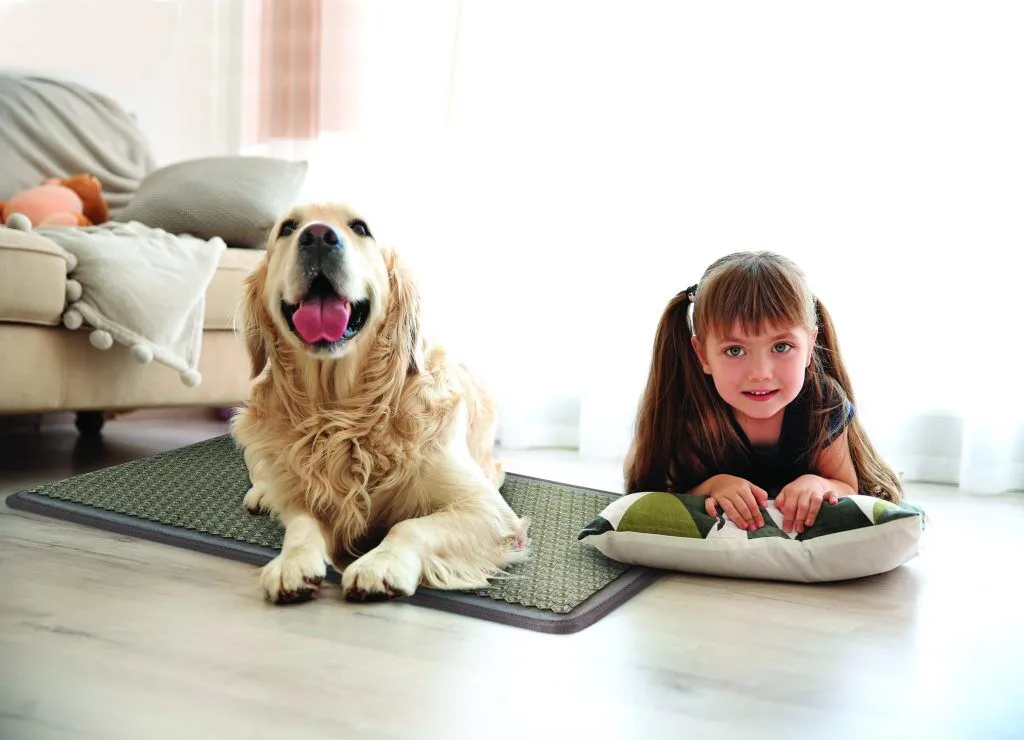
Introducing Your Pet to the PEMF Mat
Introducing your dog or cat to a PEMF mat is a process of building positive associations, not achieving immediate therapy. Patience and observation are your most important tools. Rushing can create fear and resistance, so let your pet set the pace.
Pre-Session Preparation (Days 1-2)
Before turning the mat on, make it a familiar and safe object in your pet's environment.
🐾 Place the mat with its waterproof and chew-resistant covers in a quiet, low-traffic area where your pet already likes to relax. Place it flat against a wall or in a corner to feel more den-like.
🐾 Layer your pet's own familiar bed or a favorite blanket on top of the covered mat. Sprinkle some treats or their favorite toys on it.
🐾 With the mat completely powered off, allow your pet to investigate it in their own time over 24-48 hours. Do not coax or place them on it. The goal is for them to sniff it, walk over it, and choose to lie on it voluntarily, associating it with their own scent and comfort items.
The First Powered Session When Your Pet is Ready
Only proceed when your pet is calmly resting on or near the mat of their own accord.
🐾 Set the mat to the absolute minimum: Lowest heat (86°F/30°C) and set a timer for 3-5 minutes maximum. Do not activate PEMF yet; let heat be the first new sensation.
🐾 Sit calmly nearby. Offer gentle praise and a few high-value treats if they remain relaxed. Watch their body language closely.
🐾 When the timer ends or if they get up, the session is over. Offer a treat away from the mat. Keep early sessions incredibly short and positive.
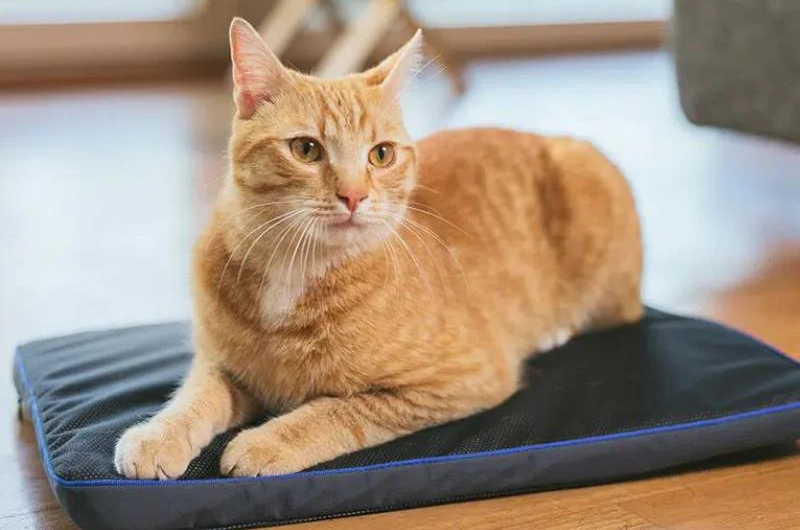
Are PEMF Pads just for dogs? No, cats love them too!
Gradual Progression & Adding PEMF
Build duration and introduce the PEMF signal slowly over multiple sessions, spaced hours or days apart.
🐾 The first week you can work up to a 10-15 minute session with low heat, with your pet remaining relaxed.
🐾 Once your pet is consistently calm with the heat for 15 minutes, you can introduce the PEMF. For the first PEMF session, revert to a 5-minute session with low heat and the PEMF on. Observe for any subtle signs of unease.
🐾 The golden rule is that if at any point your pet leaves the mat, do not return them to it. Respect their choice. You can try again later or the next day.
Reading Body Language & Troubleshooting
Your pet's behavior is your guide. Interpreting it correctly is key to success.
| What You See | What It Likely Means | Your Action |
|---|---|---|
| Voluntarily lies down, sighs, muscles relax, falls asleep | Acceptance and comfort | Proceed gradually. You’re on the right track. |
| Sniffs curiously, lies down but remains alert, takes offered treats | Cautious but willing | Keep sessions very short and positive. |
| Panting, pacing, whining, trembling, fixed stare, “whale eye” | Anxiety, overheating, or discomfort | Stop immediately. Turn the mat off. Do not force. |
| Actively avoids the area, won’t take treats near the mat | Fear or negative association | Go back to Phase 1. Power off, use more treats or toys, or consult a professional. |
Some notes
🐾 Cats vs. Dogs - Cats often require more time and autonomy. Let them explore the powered-off mat for several days. Using a pheromone spray (like Feliway) on a blanket nearby can help.
🐾 For high-energy dogs, a short walk or play session before mat time can help them settle more easily.
🐾 Do not hold your pet on the mat or use leashes, crates, or barriers to keep them there. This creates stress and defeats the therapeutic purpose.
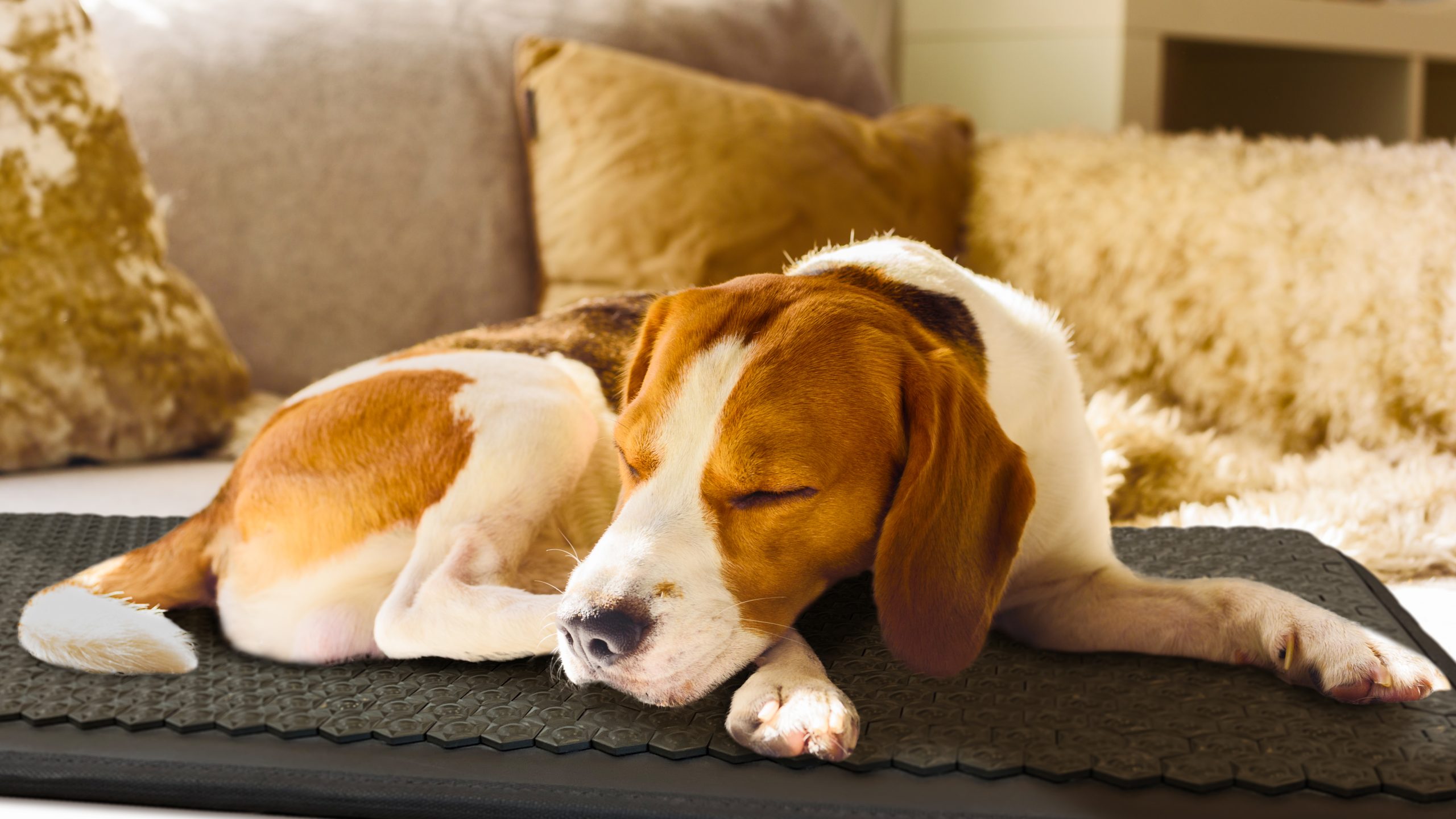
Practical Considerations
Shipping, Returns & Warranty
A human-grade mat for your pet is a real investment. Clear insight into HealthyLine’s policies and your pet’s needs makes the decision easier.
Trial Period & Returns
HealthyLine offers a 90-day trial period with a full refund guarantee. This is your most important tool for assessing if the TAJ mat is a good fit for your pet.
🐾 This extended period allows you to properly introduce your pet to the mat over several weeks, observe their response, and determine if you see meaningful benefits for conditions like anxiety or stiffness. It is highly recommended to purchase any protective covers at the same time as the mat so you can test the complete setup during the trial.
🐾 Initiate any return within the 90-day window. You are responsible for return shipping costs. Keep all original packaging, as you will likely need it for a return.
Warranty Coverage
The TAJ mat comes with a 5-year limited warranty, which is a strong offering in this market and protects against manufacturing defects.
🐾 The warranty covers the mat's materials and workmanship. It's crucial to understand that damage caused by pets, such as chewing, claw punctures, or accidents that seep through a cover, would not be covered under the standard warranty. This underscores the critical importance of the protective measures outlined in the safety section.
🐾 Register your product upon receipt and save your purchase documentation.

👉 PEMF Therapy for Dogs: Ease Pain and Improve Movement to see how PEMF can help your dog feel better
Shipping, Costs & Delivery
🐾 Shipping costs are calculated at checkout and vary based on your location and the mat size (e.g., TAJ 2020 vs. 3220). Free shipping now applies to orders of $1,000 or more.
🐾 The mats are shipped flat in a box. Be prepared for the weight (5.9 lbs for the 2020 model, 8 lbs for the 3220). Choose a delivery location where you can easily inspect the mat upon arrival.
Lifetime Upgrade Policy
HealthyLine offers a lifetime upgrade and trade-in policy. If you wish to upgrade to a larger or more advanced model in the future, you can trade in your original TAJ mat for credit.
🐾 As your pet's needs change. For example, if you get a larger dog or want to upgrade to a full-body mat for multiple pets. This policy provides a pathway without starting from scratch.

Two Paths to Pet PEMF
Choosing PEMF therapy for your pet presents two distinct options. Targeted veterinary devices and adaptable wellness mats. To provide full transparency, we compare the purpose-built Assisi LOOP alongside the HealthyLine TAJ mat. Our goal is to clarify the fundamental differences so you can select the right tool for your pet's needs.
Understanding the Assisi LOOP
The Assisi LOOP exemplifies the first path. A targeted medical device often recommended by veterinarians. Its technology, called tPEMF, is designed to stimulate the body's nitric oxide pathway to reduce inflammation and promote healing. It is commonly used for specific conditions like post-surgical recovery, arthritis, and wounds.
The following table contrasts this targeted approach with the adapted wellness use of the HealthyLine TAJ mat:
| Feature | Assisi LOOP (Veterinary Medical Device) | HealthyLine TAJ Mat (Adapted Human Wellness Mat) |
|---|---|---|
| Primary Design | Targeted anti-inflammatory medical device | Multi-therapy wellness mat (PEMF, heat, ions) |
| Core Technology | tPEMF designed to stimulate nitric oxide and reduce inflammation | PEMF combined with far infrared heat for relaxation and gentle cellular support |
| Key Requirement | Active owner involvement: must be held in place over the affected area for 15-minute sessions | Passive use: pet lies on the mat voluntarily with minimal handling |
| Standard Protocol | 2–4 sessions daily for initial weeks; significant time commitment | Once-daily cumulative sessions (about 20–30 minutes) |
| Veterinary Context | Often sold or prescribed through vets with protocols for ~300 conditions | Consumer wellness product; adapted use should be discussed with a vet |
| Device Lifespan | Disposable unit with ~150 treatments; non-rechargeable and recyclable | Durable design with no consumable parts; plugs into a wall outlet |
| Cost Model | Recurring cost of about $329 per unit; replacement required | One-time purchase (TAJ 2020: $349) |

As the table illustrates, the choice often comes down to this:
🐾 The Assisi LOOP is a targeted treatment for a specific, diagnosed inflammatory condition (like a sore hip or post-surgery site), requiring active owner involvement for short, frequent sessions.
🐾 Adapting the TAJ Mat is an approach for general wellness support, focusing on gentle, full-body relaxation and comfort that the pet can choose to use passively.
Why Include a Device We Don't Sell? Our goal is to be your trusted guide. By transparently presenting a well-known veterinary option we aim to give you the complete context you need.
This allows you to see the TAJ mat as one potential solution within a broader landscape of pet care. The most important step before starting any new therapy is always to consult with your veterinarian to decide the best path for your pet's individual needs.
Common questions from pet owners
My dog is anxious and never sits still. Can I still try this?
Yes, but success depends on your approach. For high-energy or anxious pets, the introduction phase is crucial. Focus heavily on Phase 1: Pre-Session Preparation from our guide. Let the covered, powered-off mat become a normal part of their environment for several days. Pair it with incredibly high-value treats or a calming chew they only get near the mat. The goal is to build a positive association first. Even if they only lie on it for 5 minutes while distracted by a treat, that's a successful start. Never restrain them.
How will I know if it's actually working for my pet's arthritis or anxiety?
Look for subtle, cumulative changes rather than instant miracles. For arthritis, note if your pet hesitates less before jumping, seems stiffer in the evening, or is more willing to go on longer walks. For anxiety, you might see them settle more quickly during thunderstorms or choose to rest on the mat voluntarily. Keep a simple journal to track these small wins over 3-4 weeks, as gradual improvement is the hallmark of this kind of therapy.
Is the gentle 2 Gauss intensity of the TAJ mat strong enough for my large breed dog?
Size isn't the primary factor for low-intensity, full-body PEMF. The therapeutic effect works at the cellular level. The TAJ's 2 Gauss intensity is within the moderate range used for tissue support. For a large dog, the more important factor is coverage. Ensure the mat size (like the TAJ 3220) allows the affected area (e.g., hips or spine) to be in contact. A larger mat may provide better coverage, but the intensity itself is designed to be safe and effective across sizes.
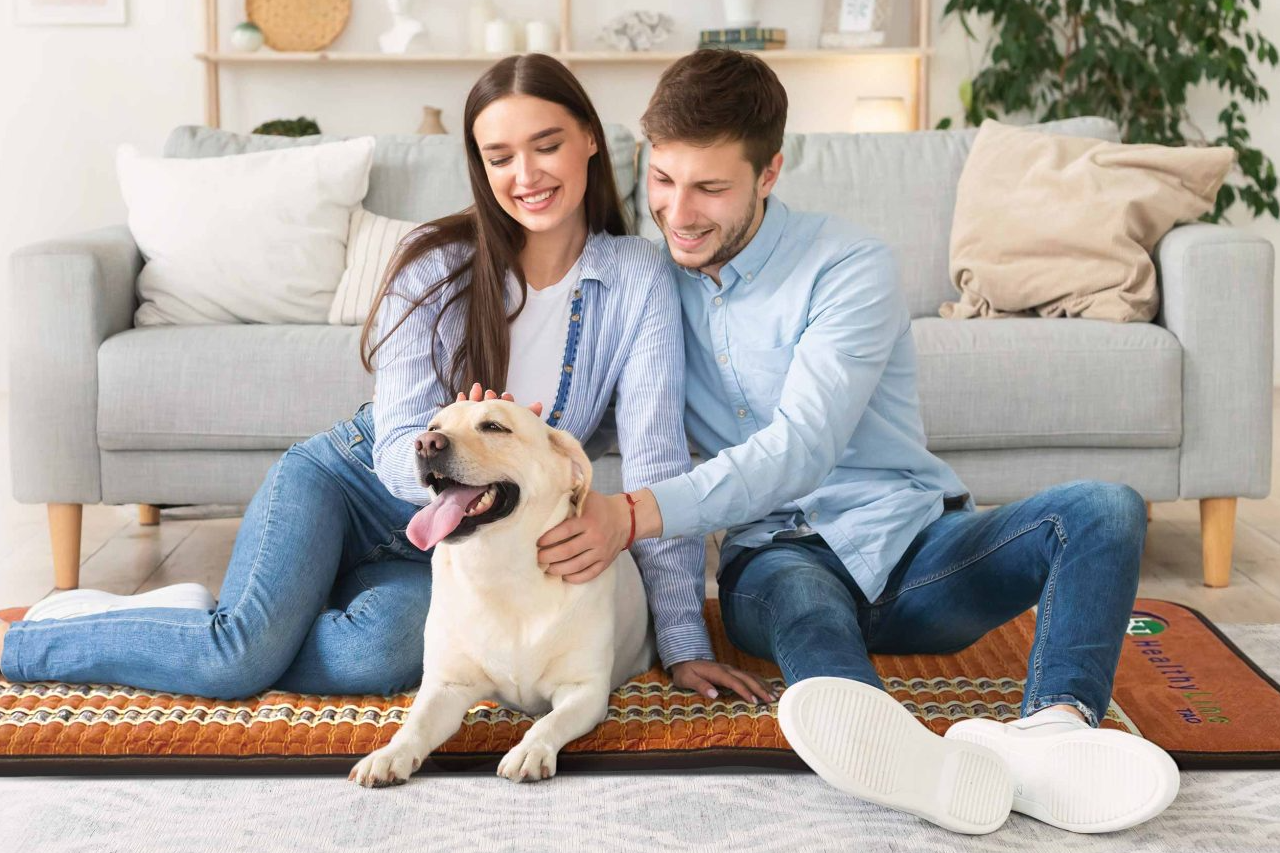
My cat is interested but won't stay on it. What can I do?
Cats require maximum autonomy. Try placing the covered, powered-off mat in a warm, sunny spot they already favor. You can sprinkle catnip or use a pheromone spray (like Feliway) on their blanket on top of the mat. The moment they choose to use it, turn on the lowest heat setting only (no PEMF). If they stay, that's a major victory. The "passive use" model is perfect for cats. It may just take them weeks, not days, to adopt it as their own.
Do I need to use both the heat and PEMF functions every time?
Not necessarily. They can be used independently. For a pet new to the mat or on a warm day, you might use only the gentle PEMF function at room temperature. For an older pet with stiff joints, the far-infrared heat alone can be very soothing. The combination is powerful, but it's perfectly fine to tailor the session to your pet's comfort and the day's needs, using the controller to select only one therapy.
What's the one thing owners most often get wrong when trying this?
The most common mistake is moving too fast and expecting a pet to immediately enjoy a full therapy session. This leads to pets rejecting the mat. The second is skipping the protective cover, which risks damage to the mat and voids any chance of a return. Success is almost entirely dependent on a slow, positive introduction and strict use of a waterproof, chew-resistant barrier.

final thoughts on the healthyline taj mat for you pet
Considering a PEMF mat for your pet? Remember these core points:
🐾 It's a Wellness Tool, not a cure. The TAJ mat offers gentle, cumulative support for comfort and relaxation, not a substitute for veterinary diagnosis or treatment.
🐾 Safety is the absolute rule. This hinges on three things: a protective cover, a slow introduction based on your pet's comfort, and approval from your veterinarian.
🐾 You Have Clear Options. Choose between a targeted medical device (like the Assisi LOOP for specific conditions) and an adapted wellness mat (like the TAJ for general comfort).
🐾 Success is Measured in Small Wins. Look for subtle improvements. A pet that settles easier, seems less stiff, or voluntarily chooses the mat for a nap.
Proceed with realistic expectations, prioritize safety, and you may find a valuable new way to support your pet's well-being.
Want more details before ordering? Explore the technical specs and human benefits in our complete product review: HealthyLine TAJ Mat Review. Or order right away through the HealthyLine website.
Don’t forget to use saunace10 for a 10% discount when purchasing through our link
While we may receive a commission for purchases made through our product links, our reviews are rigorous and grounded in merit, to ensure that our recommendations are honest, unbiased and in the interest of helping you make the best choice.
↑ Back to top
Saunace.com publishes reviews and usage guides for infrared and PEMF devices to help readers compare options and use them safely; see the About page to learn how we research and evaluate products.

Sam Everhart
Updated: February 2026
References
1. Webinars with Wendy, Lisa Miksis- What is PEMF and how does it work? SURE FOOT Equine Stability Program®, https://www.youtube.com/watch?v=-q5tVOk4aSY
2. S. Pinna et al., The Effects of Pulsed Electromagnetic Field in the Treatment of Osteoarthritis in Dogs: Clinical Study. In: Pakistan Veterinary Journal 33(1): 96 100. https://www.researchgate.net/publication/286970651_The_Effects_of_Pulsed_Electromagnetic_Field_in_the_Treatment_of_Osteoarthritis_in_Dogs_Clinical_Study
3. Sullivan MO, t al., Randomized, controlled clinical trial evaluating the efficacy of pulsed signal therapy in dogs with osteoarthritis. Vet Surg. 2013 Apr;42(3):250-4. https://pubmed.ncbi.nlm.nih.gov/23278629/
4. Zidan N, et al., The Effect of Electromagnetic Fields on Post-Operative Pain and Locomotor Recovery in Dogs with Acute, Severe Thoracolumbar Intervertebral Disc Extrusion: A Randomized Placebo-Controlled, Prospective Clinical Trial. J Neurotrauma. 2018 Aug 1;35(15):1726-1736. https://pubmed.ncbi.nlm.nih.gov/29310504/
5. Roland D, et al., Effects of pulsed magnetic energy on a microsurgically transferred vessel. Plast Reconstr Surg. 2000 Apr;105(4):1371-4, https://pubmed.ncbi.nlm.nih.gov/10744227/
6. Xiao S et al., Biological effects of negative air ions on human health and integrated multiomics to identify biomarkers: a literature review. Environ Sci Pollut Res Int. https://www.ncbi.nlm.nih.gov/pmc/articles/PMC10175061/
7. Šutalo S, Klasen L, Tichy A, Harms O. Influence of pulsed electromagnetic field (PEMF) therapy on osteoarthritis in dogs. BMC Vet Res. 2025 Oct 3;21(1):573. doi: 10.1186/s12917-025-05036-9. PMID: 41044566; PMCID: PMC12492814. https://pmc.ncbi.nlm.nih.gov/articles/PMC12492814/